Tropical Krill Flake - UK

Tropical Krill Flake - UK

£196.99In Stock

Protein-rich Tropical Krill Flake supports vibrant colour, strong condition and active feeding response in tropical fish. Buy now with fast UK delivery.

Aquarium EquipmentColour EnhancingFish FoodFlake FoodModerate CareTropicalUK

Premium Quality

Healthy, vibrant fish from trusted suppliers

Expert Care

Detailed care guides and support

Live Arrival Guarantee

Your fish arrives healthy or we'll replace it

Acclimated

Properly quarantined and ready for your tank

Why Choose This Fish?

Protein-rich Tropical Krill Flake supports vibrant colour, strong condition and active feeding response in tropical fish. Buy now with fast UK delivery.

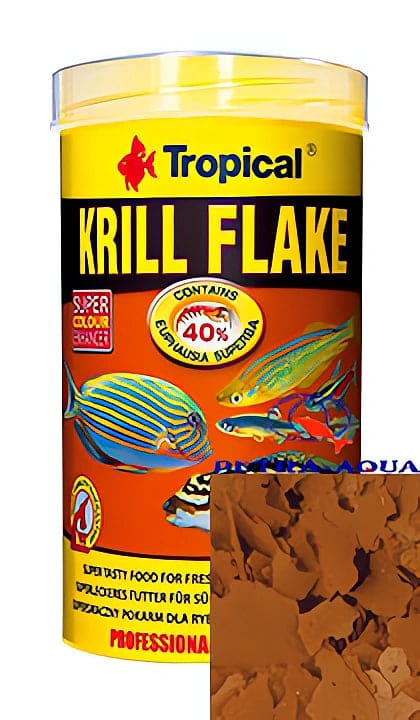
Tropical Krill Flake is a colour-boosting, protein-rich krill flake fish food designed for everyday feeding of community fish, livebearers, barbs, tetras and many small to medium cichlids. If you have ever asked what is krill flakes, the answer is simple: it is a highly palatable flake fish food made with marine krill to provide digestible protein, natural carotenoids and valuable lipids in an easy-to-feed format. For keepers comparing fish flakes, fish food tropical options and the best food for tropical fish, this formula stands out because it combines strong feeding response with practical daily use. See our product image tropical-krill-flake-dry-food.webp for the fine, crisp texture that works well whole for medium fish or as crushed krill flakes for smaller mouths.

Many customers also ask what fish eat tropical flakes. In practice, tropical krill flakes are suitable for guppies, platies, mollies, rasboras, danios, rainbowfish, many gouramis and numerous omnivorous cichlids. This makes them a flexible staple when you want fish flakes suitable for community tropical fish and a high quality flake food for tropical fish that supports appetite, colour and condition. Whether you are upgrading from a basic flake fish food or comparing krill flakes for fish with granules and chips, Tropical Krill Flake offers an easy feeding routine, reliable acceptance and a practical way to deliver fish food with vitamins and minerals for tropical fish.

🔹 Quick Facts

  • Product Type: Daily krill flakes fish food for tropical aquarium fish
  • Care Level: Moderate feeding product
  • Best For: Community tanks, livebearers, tetras, barbs, gouramis, many dwarf cichlids
  • Format: Floating to slow-sinking flakes
  • Main Benefit: flake food to support fish growth and colouration
  • Protein Focus: Useful source of protein in flake fish diets
  • Feeding Style: 1-3 small feeds daily
  • Key Practice: remove excess food to maintain water quality

Classification

  • Brand Type: European tropical fish food brand
  • Food Category: Tropical flake food with krill inclusion
  • Use Case: Staple or rotational food for omnivorous tropical fish

In the aquarium hobby, krill-based flakes sit between standard mixed flakes and more specialised colour foods. They are popular because krill is naturally attractive to fish and contributes pigments that help reds, oranges and warm metallic tones show more strongly under good lighting. For keepers comparing krill flake tropical, tropical krill gran and standard flakes, this format is often the easiest to feed across mixed community tanks.

What Is Tropical Krill Flake and Why Do Aquarists Use It?

Tropical krill flakes are made for hobbyists who want a dependable daily food with more feeding appeal than plain cereal-heavy flakes. If you have wondered what is krill made of, krill are small marine crustaceans rich in protein, carotenoids and beneficial fats. That is why krill flakes are widely used as a fish food for healthy growth and colour, especially in tanks where fish can be fussy or where colour development matters.

Another common question is what is krill fish food. In aquarium terms, it is any prepared food using krill meal, krill protein or similar marine ingredients to improve palatability and nutritional density. The result is a practical staple for aquarists seeking the best krill flake food for tropical fish without moving to a fully frozen-food routine. Compared with very light generic fish flakes, krill-based formulas are often accepted more eagerly by active feeders.

Expert Tip

When introducing a new food, feed a half-portion for the first few days and observe how quickly fish consume it. Fast acceptance, full bellies without bloating, and reduced waste are good signs that the food suits your stock.

What Fish Eat Tropical Flakes and Who Is This Food Best For?

If you are asking what fish eat tropical flakes, the answer includes a long list of common aquarium species. Tropical Krill Flake works especially well for guppies, platies, mollies, swordtails, tetras, rasboras, danios, many rainbowfish, hatchetfish, dwarf gouramis and juvenile community cichlids. It is also a practical option as flakes for guppies because the flakes can be crumbled into smaller pieces without turning to dust too quickly.

For keepers of larger or more robust fish, this food can also be used alongside specialist diets. For example, pair it with Tropical Cichlid Chips for medium cichlids, or rotate with Tropical Supervit Granulat when you want a denser sinking option. In mixed aquariums, many aquarists feed krill flakes in the morning and a second food in the evening to cover different feeding zones and mouth sizes.

Fish Type Suitable? Notes
Guppies and livebearers ✅ Yes Use small pinches or crushed krill flakes
Tetras and rasboras ✅ Yes Excellent for active midwater feeders
Large predatory fish ⚠️ Limited Better as a supplement than sole diet

How Do You Feed Tropical Krill Flakes Properly?

A good fish food feeding guide starts with portion control. Feed only what your fish can finish in around 30-90 seconds, once or twice daily for lightly stocked tanks and up to three times daily for growing juveniles. This is the easiest answer to how to feed tropical fish flakes without causing waste. The flakes should be eaten quickly, with very little drifting into filters or settling behind decor.

For nano fish, rub the flakes gently between your fingers to make crushed krill flakes. For medium fish, feed the flakes whole. If you keep top and midwater species together, spread the food across the surface rather than dropping it in one spot. This reduces bullying and gives shy fish time to feed.

Time Food Amount
Morning Tropical Krill Flake Small pinch, fully eaten in 60 seconds
Evening Rotate with granules or algae food Small pinch based on stock level

⚠️ Overfeeding Warning

Too much krill flakes food will soften in the water, increase organic waste and drive ammonia and nitrite problems. Always remove excess food to maintain water quality, especially in warm tropical tanks with heavy stocking.

What Are the Main Nutritional Benefits of Krill Flake Fish Food?

The biggest advantages of krill flake fish food are feeding response, digestible marine protein and natural pigment support. Aquarists often search for flake fish benefits, and this is where krill formulas shine. They can help encourage feeding in recently imported fish, support body condition and contribute to stronger red and orange tones when used consistently as part of a varied diet.

Another common question is does flake have omega 3. Many krill-based flakes do contain marine-derived fats that contribute omega-3 content, although exact levels vary by formula. This is one reason hobbyists compare them with supplements and ask about an alternative to krill oil. In fishkeeping, the goal is not human supplementation but a balanced aquarium diet where marine ingredients improve palatability and nutritional breadth.

If you are curious about krill fish benefits or krill nutrition facts, krill are valued for protein, carotenoids and lipid fractions that support energy and colour. That makes this a smart option when you want fish food with vitamins and minerals for tropical fish rather than a very plain maintenance flake.

High
Palatability
Strong
Colour support
Daily
Staple use
Easy
Portion control

Is Freeze Dried Krill Good for Fish, and How Does It Compare with Flakes?

Yes, is freeze dried krill good for fish is a fair question, and the answer is generally yes for suitable species. Freeze-dried krill offers a larger, chunkier treat for bigger fish, but flakes are usually more practical for daily community feeding. Krill flakes for fish spread more evenly, are easier for small mouths to eat and are simpler to portion in mixed tanks.

Flakes also suit hobbyists who want the best tropical fish flakes for beginners. They are easy to store, easy to crush and simple to combine with other foods. If your stock includes herbivores or fish that need more plant matter, rotate with Tropical 3-Algae Granulat. If you want a broad all-round staple, Tropical Supervit Flakes and Tropical Ovo-vit Flakes are useful companion foods.

How Does Tropical Krill Flake Compare with Granules, Chips and Other Krill Foods?

Many aquarists compare tropical krill flakes with tropical krill gran, chips and specialist cichlid foods. Flakes are best for surface and midwater feeders, while granules are often better for fish that feed lower in the water column. Chips and larger pellets suit stronger feeders with wider mouths.

If you are comparing this product with search terms like northfin krill flake, xtreme krill flake, xtreme krill flakes, xtreme krill flakes fish food or even xtreme krill flakes uk, the key differences usually come down to texture, ingredient balance, flake thickness and how quickly the food softens. Some keepers also search for xtreme krill flakes ingredients, xtreme krill flakes review, xtreme krill flakes near me, xtreme krill flakes canada or xtreme krill flakes 3.5 oz when comparing brands. In practical aquarium use, what matters most is acceptance, digestibility and how cleanly the food is eaten in your tank.

Feature Tropical Krill Flake Tropical Krill Gran
Best feeding zone Surface to midwater Midwater to lower levels
Best for Community tanks, small mouths Fish that prefer denser bites
Ease of crushing Very easy Moderate

Can You Use This Food for Guppies, Cichlids and Community Fish Together?

Yes, this is one of the strengths of krill flakes tropical. In mixed aquariums, it works well as a shared staple, especially when fish have similar protein needs. As flakes for guppies, it supports active livebearers and can be broken into tiny pieces for juveniles. As a light colour food for community cichlids, it can be fed alongside Tropical Cichlid Chips to provide more variety.

For broader community feeding, many keepers rotate this product with Tropical Pro Defence Granules S for immune support, Tropical Supervit Granulat for omnivore coverage and D-Allio Plus Granulate when garlic-based variety is useful. This kind of rotation helps avoid nutritional gaps and keeps fish interested at feeding time.

Rotation Tip

A simple three-food rotation works very well: krill flakes for colour and appetite, a balanced community granule for staple nutrition, and an algae-rich food for species that browse plant matter.

What Common Feeding Mistakes Should You Avoid?

The most common mistake with flake fish food is feeding too much because flakes look light and insubstantial in the hand. In reality, even a small pinch can be enough for a modest community tank. The second mistake is using one food for every species long term. While premium krill flake fish food for community tropical fish is highly useful, variety still matters.

Another issue is poor storage. Keep the container tightly sealed, cool and dry. Humidity breaks down texture and can reduce the crispness that helps flakes stay intact on the surface. If the food begins to smell stale or clump, replace it. Good storage is particularly important if you buy a large pack tropical fish flake food UK size or are considering formats such as tropical krill flake 11L 2kg for fish rooms or multiple tanks.

⚠️ Storage Warning

Do not store fish food above a warm aquarium hood or in direct sunlight. Heat and moisture speed nutrient loss and can make flakes soften before they even reach the tank.

What Do Krill Look Like, and Why Does That Matter in Fish Food?

Some buyers ask what does krill look like or even what does a krill fish look like. Krill are not fish at all; they are small shrimp-like marine crustaceans. That matters because their natural composition is different from many land-based protein ingredients. Their reddish colour comes from carotenoid pigments, which is one reason krill-based foods are associated with colour enhancement.

In practical terms, you do not need to see whole krill in the tub for the food to be effective. What matters is that the formula uses krill-derived ingredients in a way fish readily accept. That is why many aquarists choose krill flakes fish food when they want a visible improvement in feeding enthusiasm without switching to frozen foods.

Can You Buy Krill, Can You Buy Krill to Eat, and Are Human Krill Questions Relevant Here?

Searches such as can you buy krill, can you buy krill to eat, what does krill taste like, does krill oil help with dry skin, difference between red krill oil and krill oil and krill oil expiration date are usually about human nutrition rather than aquarium feeding. They are not directly relevant when choosing fish food, but they do show why krill is widely recognised as a nutrient-dense marine ingredient.

For fishkeepers, the useful takeaway is simpler: krill is highly attractive to many tropical species, and foods based on it can be excellent for appetite and colour. You are not buying a human supplement here; you are choosing a practical fish food tropical formula designed to be fed safely and consistently in the aquarium.

How Does Tropical Krill Flake Fit into a Complete Feeding Plan?

Tropical Krill Flake works best as part of a varied weekly routine. Use it as the main morning feed for community fish, then rotate evening meals between granules, algae foods and specialist formulas based on your stock. For example, pair it with Tropical 3-Algae Granulat for plant-focused species, Tropical Pro Defence Granules S for small community fish, and Tropical Supervit Flakes when you want a broader everyday blend.

If you keep bottom-feeding oddballs or non-standard species, select a more specialised food instead of relying on flakes alone. For example, Tropical Food for Sterlet is made for a very different feeding style and should not be replaced by surface flakes. Matching food form to mouth shape and feeding zone is one of the easiest ways to improve health and reduce waste.

Tropical Supervit Flakes — A broad-spectrum staple for mixed community aquariums and a useful rotation partner to krill-based flakes.
Tropical 3-Algae Granulat — Ideal for adding plant matter to the diet of omnivores and algae-grazing species.
Tropical Pro Defence Granules S — A smart companion food for small tropical fish that need fine particle size and immune-focused nutrition.

Why Choose Tropical Krill Flake from Tropical Fish Co?

We selected this product because it fills a very specific need: a reliable krill flakes food that is easy to use in everyday community aquariums, not just as an occasional treat. It is especially useful for keepers looking for the best food for tropical fish in mixed tanks where some fish prefer flakes and others need a more enticing formula than standard cereal-heavy foods. The crisp flake texture makes portion control easier, and the krill content helps improve feeding response in fish that ignore bland foods.

Customers often tell us this type of food is most helpful in tanks with guppies, tetras and small gouramis that need a visible colour boost without moving to messy frozen diets. If you are building a complete feeding cupboard, combine this product with D-Allio Plus Granulate, Tropical Ovo-vit Flakes and Tropical Supervit Granulat for a practical rotation across the week.

Why Choose Tropical Fish Co for Tropical Krill Flake

  • Selected for strong acceptance in community tropical aquariums, especially livebearers and small omnivores
  • Easy to pair with specialist foods in our tropical fish food range for a complete weekly feeding plan
  • A practical UK option for aquarists comparing krill flake tropical, granules and other everyday staples

You Might Also Like

To build a more complete feeding routine, try Tropical Supervit Flakes for all-round daily nutrition, Tropical Ovo-vit Flakes for added variety, and Tropical 3-Algae Granulat for herbivorous or omnivorous species that need more plant content. If you keep cichlids, Tropical Cichlid Chips are a better shape and density for stronger feeders. For smaller fish, Tropical Pro Defence Granules S is an excellent companion product. You can also browse the wider tropical fish food collection to create a balanced rotation for every tank in your fish room.