Moderate
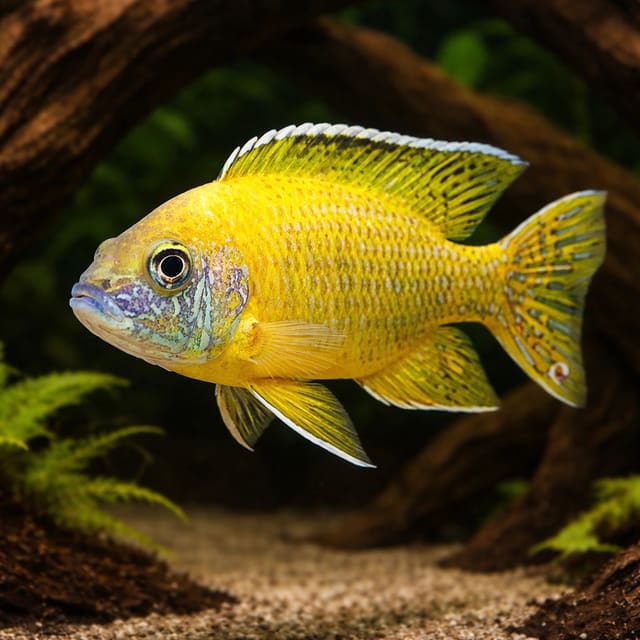
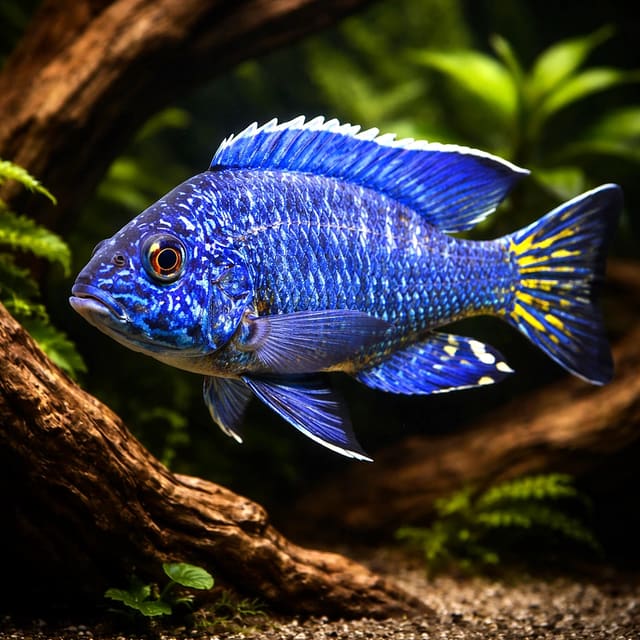
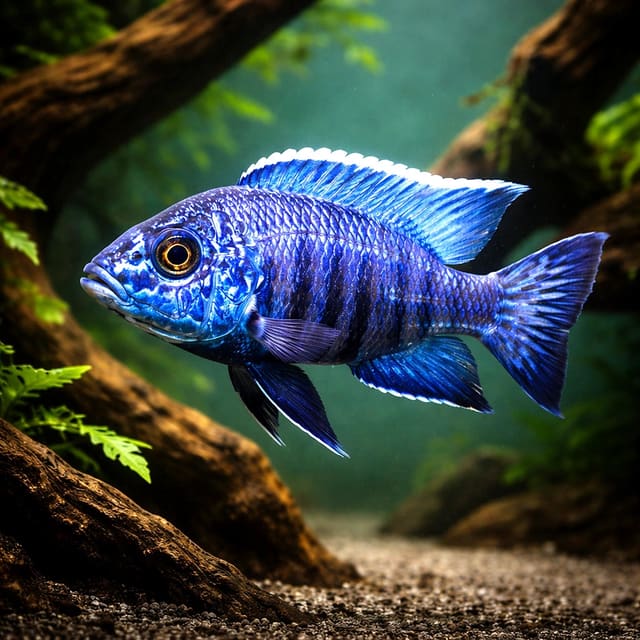
Blue orchid Peacock Cichlid (Aulonocara candensis)
24–27°C · pH 8–8.5
£15.99
A vivid blue Lake Malawi peacock cichlid for hard, alkaline aquariums with sand, rockwork, open swimming space and carefully matched tank mates.
Adult size is the maximum length this species reaches at full maturity (scientific sources). The livestock you receive will be younger and smaller. Product-photo provenance and any image-specific limitations are stated on the listing.
Aulonocara jacobfreibergi
Save when buying multiple fish. Each quantity is one fish; sex and pair formation are not guaranteed unless the selected variant explicitly states them.
Confirm your email, then we’ll send an availability message for this exact item if it returns within 180 days.
This request is only for this product—no newsletter or other promotions. A mail-provider retry may very rarely duplicate the same availability message. Unconfirmed addresses are removed after 48 hours. See our privacy policy.
A vivid blue Lake Malawi peacock cichlid for hard, alkaline aquariums with sand, rockwork, open swimming space and carefully matched tank mates.
Adult size is the maximum length this species reaches at full maturity (scientific sources). The livestock you receive will be younger and smaller. Product-photo provenance and any image-specific limitations are stated on the listing.
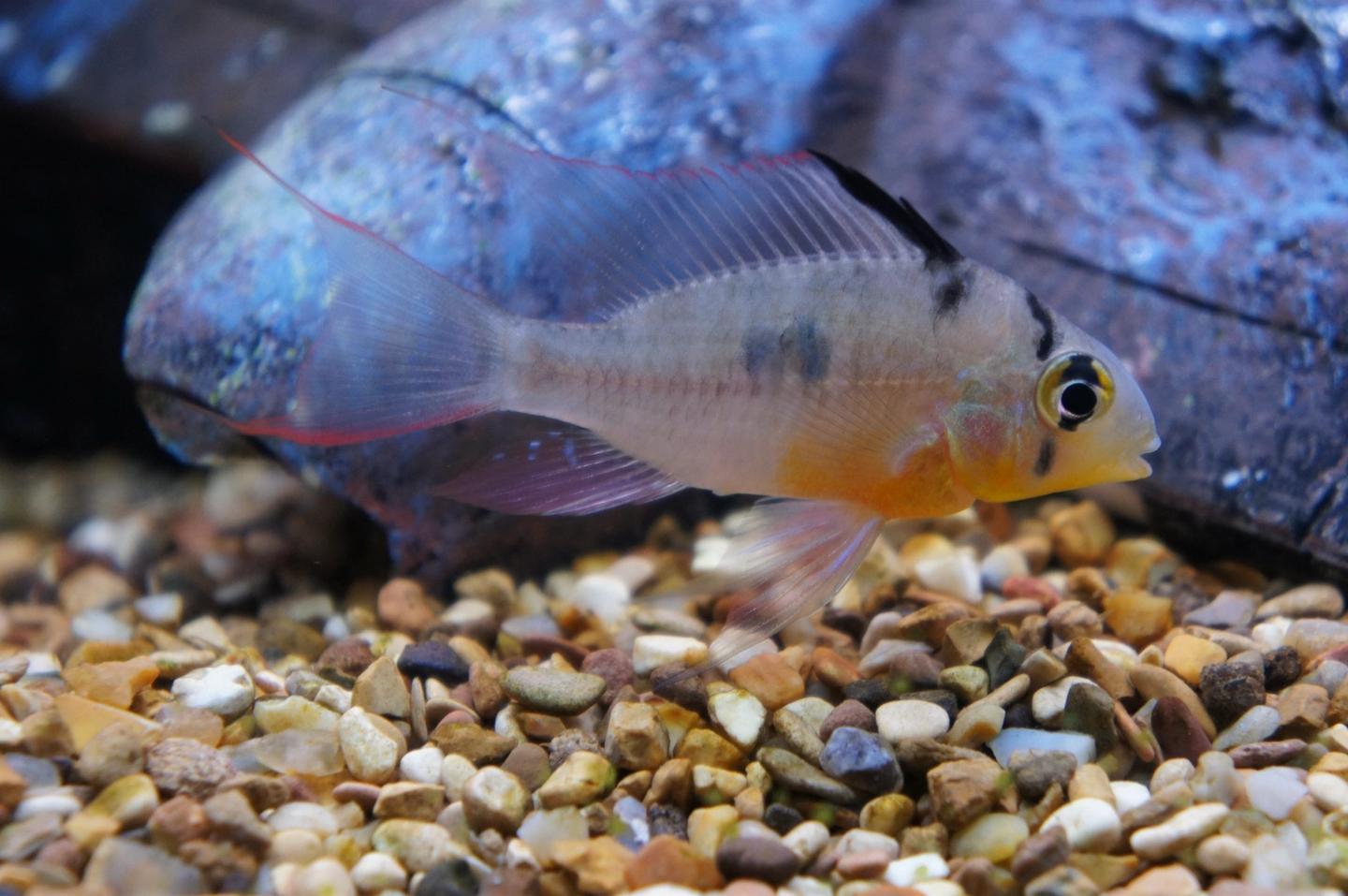
Cichlids are a family of roughly 1,800 accepted species, not one care type. Before buying, identify the exact species and source, then compare adult measurement, usable tank dimensions, social system, territory, tested water, diet and an exit plan. No family-wide minimum tank, water range or tank-mate list is safe.
Maintain these water conditions for optimal health and vibrant colors
Jacobfreibergi Peacock Cichlid Blue is a blue form of the Lake Malawi peacock cichlid Aulonocara jacobfreibergi. It is a display fish for aquarists who want bright African cichlid colour without turning the aquarium into a rough mbuna-only setup. The key is to give it the right Malawi environment: hard alkaline water, open sand, stable filtration, rockwork for boundaries and tank mates chosen for similar size and confidence.
This is not a soft-water community fish and it should not be treated like a small peaceful tetra or gourami. FishBase records Aulonocara jacobfreibergi from Lake Malawi, with adult size up to around 15 cm and aquarium care centred on warm, alkaline, mineral-rich water. Seriously Fish notes that males can be more assertive than some other peacocks, especially toward similar-looking fish, so the best results come from planning the whole aquarium rather than adding one fish at random.
| Scientific name | Aulonocara jacobfreibergi |
|---|---|
| Common names | Jacobfreibergi Peacock Cichlid Blue, Freiberg's Peacock, blue peacock cichlid |
| Origin | Lake Malawi, Africa |
| Adult size | Up to about 15 cm total length |
| Temperature | 24-26C for a stable Malawi aquarium |
| pH | 7.5-8.5, with stability more important than chasing a single number |
| Hardness | Hard, mineral-rich water; avoid soft acidic conditions |
| Minimum aquarium | 200 litres or larger for a planned peacock / hap community |
| Temperament | Semi-aggressive; confident rather than chaotic when stocked correctly |
| Best for | Lake Malawi peacock and hap displays with open swimming room |
The blue colour is the eye-catcher, but water chemistry and layout are what keep this fish looking good. Peacock cichlids come from hard, alkaline Lake Malawi conditions. In softer water they may survive for a while, but colour, appetite and long-term health are less reliable. Aim for clean, oxygen-rich water with a steady pH and enough carbonate hardness to resist sudden drops.
Layout is just as important. Use a sand or fine smooth substrate with rock piles, caves and broken sight lines at the back and sides. Leave open swimming space across the front and centre. This lets males display without constantly trapping other fish in corners, and it gives females or quieter tank mates somewhere to move away from attention.
Use sand or fine gravel that will not damage mouths as the fish investigates the bottom. Rockwork should be stable before water is added, especially if larger cichlids may dig around it. Build several separate visual territories instead of one single cave pile. The aim is not to crowd the tank with stone; it is to give structure while keeping enough open water for active swimming.
Malawi cichlids are active feeders and produce a meaningful waste load, so filtration should be generous. Use strong biological filtration, regular water changes and good surface movement for oxygen. Flow can be moderate to lively, but the fish should still be able to hold position and display naturally without being blasted across the aquarium.
Balanced lighting shows the blue tones best. Very dim tanks can make peacocks look dull, while harsh bare lighting can wash out colour and make fish feel exposed. A dark background, clean glass and pale sand often make the fish easier to view without needing artificial colour tricks.
| Parameter | Recommended range | Practical note |
|---|---|---|
| Temperature | 24-26C | Keep stable; avoid sudden swings during water changes. |
| pH | 7.5-8.5 | Alkaline water suits Malawi cichlids better than soft acidic water. |
| Hardness | Hard / mineral-rich | Use a Malawi buffer or mineralised source water if your tap water is soft. |
| Nitrate | As low as practical | Regular maintenance keeps appetite, colour and growth more consistent. |
| Water changes | Weekly, matched to stocking | Match temperature and chemistry so the fish is not shocked. |
Aulonocara jacobfreibergi is usually best kept with other Lake Malawi peacocks and peaceful haps of similar size. It is not a good match for very small fish, soft-water species, delicate long-finned fish or timid community fish. It can also be stressed by very aggressive mbuna if the aquarium is small or poorly arranged.
Males may react strongly to fish with similar colour, shape or display behaviour. If you want more than one peacock male, choose tank mates carefully, provide space and avoid putting several very similar blue males into a cramped aquarium. A single male with compatible cichlids is often the easier and better-looking display.
| Tank mate type | Suitability | Reason |
|---|---|---|
| Other Malawi peacocks | Good with planning | Choose different colour patterns and avoid overcrowded male rivalry. |
| Peaceful haps | Often suitable | Similar water needs and enough confidence for a Malawi display. |
| Synodontis catfish | Usually suitable | Robust bottom-dwellers for larger African cichlid aquariums. |
| Small community fish | Avoid | Wrong water requirements and risk of bullying or predation. |
| Aggressive mbuna | Use caution | Can outcompete or harass peacocks if the stocking plan is wrong. |
Feed a varied diet based on quality Malawi cichlid pellets or granules, with frozen foods such as brine shrimp, mysis, daphnia and bloodworm used as variety rather than the whole diet. Avoid fatty feeder fish and heavy mammal-based foods. Small portions offered regularly are better than one large messy feed.
Peacocks feed actively and learn routines quickly, but do not let the most confident fish take everything. Watch the quieter tank mates during feeding and spread food across the flow if needed. Good feeding supports colour, body shape and steady growth, but water quality must stay ahead of appetite.
| Food | How to use it | Care note |
|---|---|---|
| Malawi cichlid pellets | Main prepared diet | Choose a size the fish can swallow cleanly. |
| Frozen brine shrimp or mysis | Useful variety food | Rinse if needed and avoid overfeeding. |
| Daphnia | Light conditioning food | Helpful when you want variety without heavy waste. |
| Bloodworm | Occasional treat | Use moderately, not as the staple. |
Keep the lights low when the fish arrives and give it a calm route into the aquarium. Test temperature and water chemistry before acclimation. Because Malawi cichlids depend on mineral-rich alkaline water, sudden chemistry changes are more risky than the species' tough reputation suggests.
During the first week, check that the fish is not being trapped by established tank mates. Some hiding at first is normal, but constant chasing, clamped fins or refusal to feed means the stocking plan or layout needs adjustment. Extra rock breaks and a temporary divider can help if one fish dominates the entire tank.
| Dispatch style | Livestock is packed for live-animal transport and sent through an appropriate courier service when available. |
|---|---|
| Arrival cover | Eligible livestock orders are covered by our Live Arrival Guarantee. |
| First order | New customers can use WELCOME5 for 5% off their first order while the code is active. |
| Planning help | Use the care notes above before ordering so the aquarium is ready for hard-water Malawi fish. |
Plan for an adult fish up to about 15 cm. A small juvenile still needs an aquarium designed for its adult size, swimming style and territorial behaviour.
No. It is a Lake Malawi cichlid and should be kept in hard, alkaline water with compatible fish. Soft acidic community conditions are the wrong long-term environment.
It is better described as semi-aggressive. In a large, well-planned Malawi aquarium it can be manageable and impressive, but cramped tanks or similar-looking rivals can trigger chasing.
Use quality Malawi cichlid pellets as the staple, then add small frozen foods for variety. Keep portions sensible so filtration and water quality stay stable.
Care notes were cross-checked against FishBase for species size and water data, Seriously Fish for aquarium temperament and compatibility cautions, and general Lake Malawi peacock care guidance for hard alkaline aquarium setup.
No reviews for this item yet. Bought one? Honest reviews only, good or bad.
What customers say about ordering from us
Easy website plenty of info on fish your buying great to pick a time slot
TRACEY DURRANT · 7 Oct 2026
Got some lovely fish thank you
Kevin Mackie · 7 Oct 2026
Reviews of our shop, collected by Judge.me, an independent third-party review collector. Newest first.