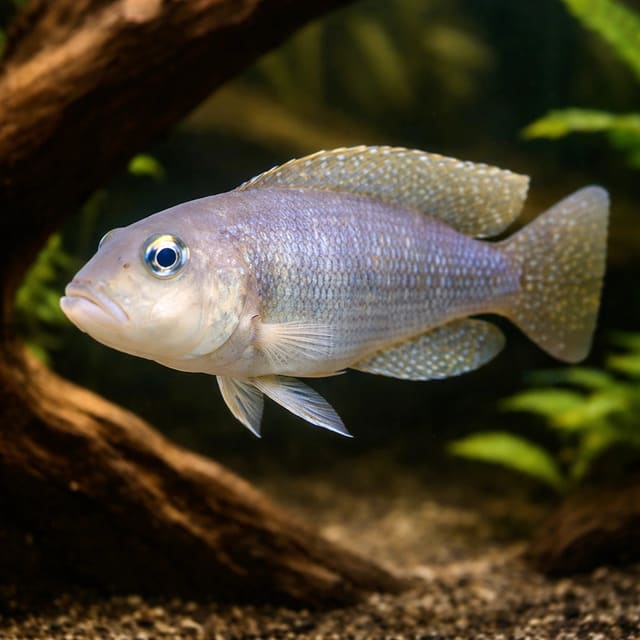
Aulonocara sp. 'Firefish' - Tropical Fish for Sale UK
24–28°C · pH 7.5–8.5 · 200L

Lamprologus buescheri
A striking, compact Tanganyikan cichlid with bold striping and engaging territorial behavior, ideal for a carefully set up hard-water aquarium. Moderate care, semi-aggressive. 24-27C, pH 7.5-8.5.
Maintain these water conditions for optimal health and vibrant colors
The Striped Lamprologus "Katoto" (Lamprologus buescheri) is a captivating Lake Tanganyika cichlid that brings unique beauty and fascinating behavior to specialized hard-water aquariums. Endemic to the rocky shorelines of Lake Tanganyika in East Africa, this compact cichlid reaches approximately 4.5cm in adult size, making it one of the smaller Tanganyikan species suitable for moderately sized setups. The "Katoto" locality variant showcases particularly refined striping patterns with alternating dark and light horizontal bands creating striking visual contrast. As cave-spawning biparental cichlids forming devoted pair bonds, they exhibit rewarding breeding behaviors and parental care that captivate dedicated aquarists. Their territorial yet manageable temperament combined with beautiful patterning makes them excellent subjects for authentic Lake Tanganyika biotope displays. Available for sale UK-wide through specialist suppliers, Lamprologus buescheri offers aquarists the opportunity to maintain one of Tanganyika's most attractive smaller cichlids in carefully prepared alkaline aquariums replicating East African rift lake conditions.
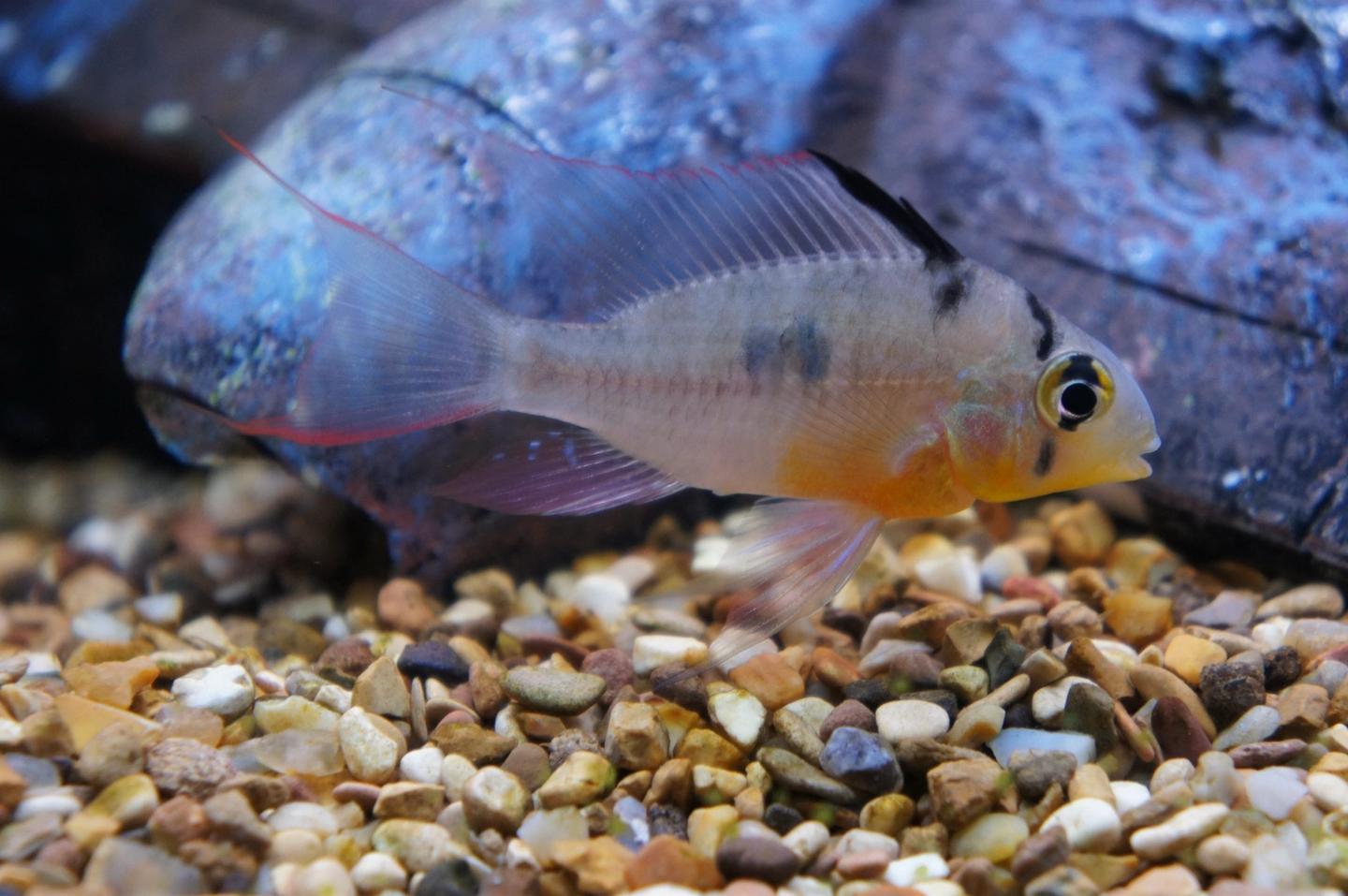
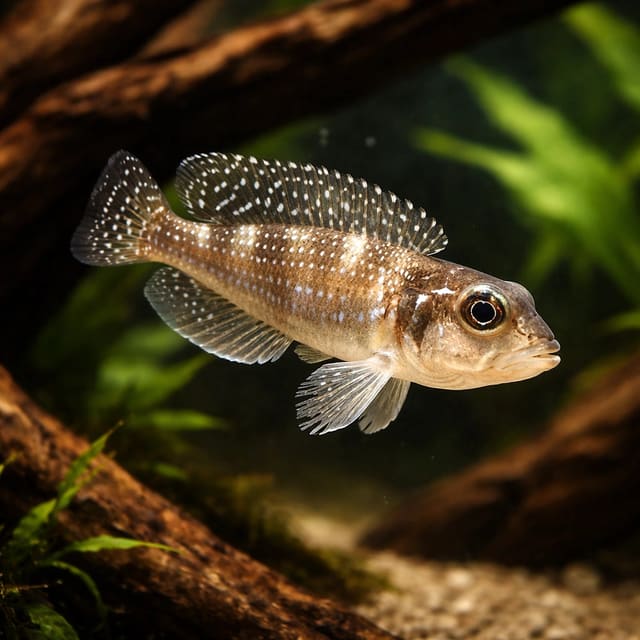
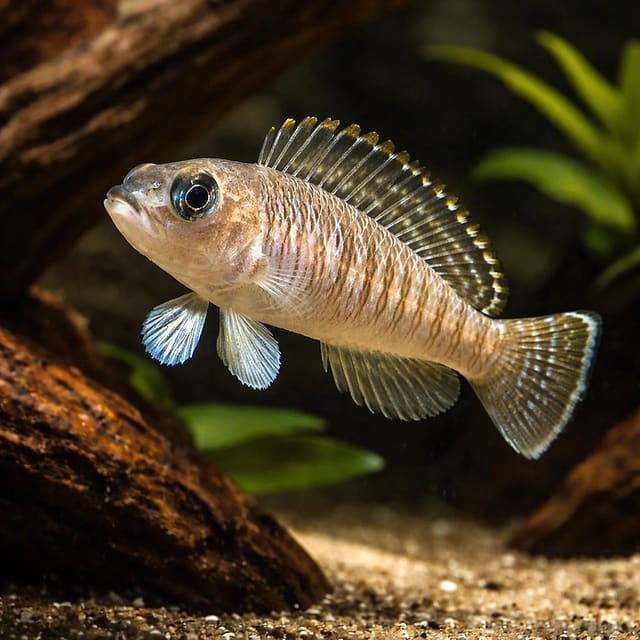
The Katoto locality Lamprologus buescheri displays elegant horizontal striping along a cream to light tan base coloration. The body features 5-7 bold dark brown to black horizontal stripes running from behind the gill covers to the caudal peduncle, creating dramatic zebra-like patterning. These stripes are cleanly defined with excellent contrast, particularly visible under proper lighting. The dorsal fin is elongated and displays similar striping continuing the body pattern, whilst the caudal fin shows subtle spotting or light barring. The body shape is moderately elongated and laterally compressed—typical of shell and rock-dwelling Lamprologus species—with a slightly pointed snout suited to investigating crevices. Males are marginally larger than females with slightly more intense coloration and fractionally larger fins, though sexual dimorphism is subtle compared to many cichlid species. The eyes are large and positioned forward, providing excellent binocular vision for navigating complex rocky environments. Juveniles display similar but less intense patterning that sharpens and intensifies as they mature. The combination of horizontal striping against light background creates a distinctive appearance easily distinguishable from most other Tanganyikan cichlids.
In Lake Tanganyika, Lamprologus buescheri inhabit rocky littoral zones where sedimentary and igneous rock formations create complex underwater landscapes with abundant crevices, caves, and overhangs. These cichlids occupy territories centered on suitable caves or tight rocky spaces that provide security and spawning sites. They feed primarily on small invertebrates including insect larvae, zooplankton, and microcrustaceans picked from rock surfaces and substrate. The lake's distinctive water chemistry features very hard, highly alkaline water (pH 7.8-9.0), exceptional clarity, high oxygen saturation, and stable warm temperatures. Males establish and defend small territories, displaying to attract females whilst aggressively repelling rivals and potential predators. Breeding pairs form relatively stable bonds, often remaining together through multiple spawning cycles. Wild populations are moderately active, spending time investigating rocky crevices, defending territories, and foraging. The stable environmental conditions and abundant structural complexity of their native habitat inform captive care requirements—particularly the necessity of hard, highly alkaline water and extensive rockwork for territory establishment and spawning.
A minimum 80-litre aquarium provides adequate space for a breeding pair, with 120+ litres recommended for small colonies or community setups with compatible tankmates. Aquascaping should emphasize creating numerous small caves and crevices using flat rocks stacked to form tight spaces with multiple entrance points. Lake Tanganyika cichlids appreciate complex three-dimensional rockwork extending from substrate to near the water surface. Use limestone, tufa rock, or artificial decorations that naturally buffer toward alkaline pH. Substrate choice includes crushed coral, aragonite sand, or fine gravel that helps maintain stable alkaline chemistry. Plants are optional though hardy species like Vallisneria or Anubias can be incorporated if desired. Lighting can be moderate to bright as Tanganyikan cichlids are not particularly light-sensitive. High-quality filtration is essential with emphasis on biological capacity and water movement—aim for 6-8 times tank volume turnover hourly to replicate the well-oxygenated conditions of Lake Tanganyika. Create directional flow using powerheads or spray bar positioning to simulate natural wave action. Water changes of 25-30% weekly using hard, alkaline water maintain stable parameters. Temperature stability and excellent oxygenation through water movement support optimal health and breeding behavior. A tight-fitting lid prevents escape as these fish may jump when startled.
As carnivores, Striped Lamprologus require protein-rich diets emphasizing meaty foods appropriate for their small mouths. High-quality micro pellets or granules formulated for carnivorous cichlids provide convenient foundational nutrition. Supplement regularly with small frozen foods including brine shrimp, daphnia, cyclops, mysis shrimp, and finely chopped bloodworms. Occasional live foods such as live brine shrimp, daphnia, or microworms provide excellent conditioning and stimulate natural hunting behaviors. Feed twice daily in small portions they can consume within 2-3 minutes, adjusting quantities based on body condition and activity level. Breeding pairs require increased feeding frequency and variety to support egg production and parental care energy demands. While primarily carnivorous, small amounts of spirulina-based foods can be offered occasionally for dietary variety. Avoid large food items that exceed their mouth capacity, and avoid mammalian-based proteins which can cause digestive issues. Their small size means they have relatively high metabolic rates requiring consistent regular feeding rather than infrequent large meals. Variety in food types ensures complete nutrition and supports optimal coloration and breeding readiness. Fasting one day weekly promotes digestive health.
Lamprologus buescheri exhibit semi-aggressive temperaments with clear territorial behavior, particularly males defending breeding caves. Territories are relatively small compared to larger Tanganyikan cichlids, centered on selected caves that provide security and spawning sites. Aggression typically manifests through lateral displays, fin spreading, and chase behaviors rather than serious physical combat. Males are more territorial and assertive than females, especially during breeding periods when aggression intensifies. Pairs form relatively stable bonds, often remaining together through multiple breeding cycles and cooperating in parental care. These moderately active fish spend time patrolling territories, investigating rocky crevices, and resting near cave entrances. They are relatively bold compared to some dwarf cichlids, readily visible during feeding times. Breeding pairs demonstrate coordinated territory defense, with both partners contributing to repelling intruders. Spawning triggers increased territorial vigilance and heightened aggression toward any fish approaching the breeding cave. Despite their territorial nature, they generally tolerate appropriate tankmates occupying different zones or territories. Understanding their need for caves and territories is essential for maintaining stable social dynamics and supporting breeding behavior.
Provide more caves than pairs when keeping multiple pairs or small colonies. Excess cave options allow subdominant pairs to establish territories without constant conflict with dominant pairs, creating more harmonious social dynamics.
Ideal companions for Lamprologus buescheri include other Lake Tanganyika cichlids of similar size and temperament that occupy different ecological niches. Suitable species include shell-dwelling cichlids like Neolamprologus multifasciatus or N. brevis (which occupy shell beds rather than rock caves), similarly sized rock-dwelling Julidochromis species, and appropriate Neolamprologus varieties. Synodontis catfish species from Lake Tanganyika make excellent companions occupying different zones and activity periods. Some aquarists successfully maintain goby cichlids or smaller cyprichromines alongside cave-dwelling lamprologines in larger setups. Avoid large aggressive cichlids that would dominate or bully them, very small fish that may be harassed, and overly territorial bottom dwellers competing for the same caves. Non-Tanganyikan species are generally incompatible due to differing water parameter requirements—mixing rift lake cichlids with soft-water species rarely succeeds long-term. When keeping multiple L. buescheri pairs, ensure adequate space and numerous territories to distribute aggression. Peaceful upper-level fish from Lake Tanganyika can work in larger community setups. Always provide substantially more caves than cichlid pairs to minimize territorial conflicts.
Striped Lamprologus are cave spawners forming pair bonds and exhibiting biparental care. Breeding typically occurs in carefully maintained Tanganyikan water conditions with stable alkaline pH (8.0-8.5), hard water, and temperatures at the warmer end of their range (26-27°C). The pair selects a suitable cave, which both partners clean meticulously before spawning. The female deposits 30-80 adhesive eggs on the cave ceiling or walls whilst the male guards the entrance. Both parents participate in brood care, with the female providing direct egg care (fanning, removing fungused eggs) whilst the male defends the broader territory against intruders. Eggs hatch within 48-72 hours depending on temperature, producing tiny larvae that remain attached to cave surfaces via adhesive glands. After approximately 5-7 days, fry become free-swimming under close parental supervision. Both parents may guard and herd fry for several weeks. Feed newly free-swimming fry newly hatched brine shrimp, microworms, and finely crushed prepared foods. Parents can become extremely protective during breeding—aggression toward tankmates intensifies dramatically. For optimal fry survival, provide rearing caves with narrow openings parents can easily defend. Some pairs tolerate previous offspring remaining in the territory, creating multi-generational colonies in larger aquariums. Breeding success requires stable water chemistry, appropriate caves, and conditioned pairs.
Maintaining hard, alkaline, well-oxygenated water replicating Lake Tanganyika conditions is absolutely essential for long-term health. Require abundant rock caves providing multiple territories and spawning sites—inadequate cave structures cause stress and suppressed breeding. Best kept in Tanganyika biotope setups with compatible species sharing identical water parameter requirements—avoid mixing with soft-water species. Regular partial water changes of 25-30% weekly using appropriately buffered hard, alkaline water maintain stable chemistry and remove organic waste. Monitor for common cichlid diseases including ich, velvet, and bacterial infections, treating promptly with appropriate medications. These relatively hardy cichlids tolerate stable Tanganyikan conditions well but are sensitive to parameter fluctuations—stability is more important than exact values within the appropriate range. Avoid soft, acidic water which causes severe stress and immune suppression. Strong filtration with excellent biological capacity and water movement maintains the pristine conditions Tanganyikan species require. Their territorial nature means injuries from disputes can occur—maintain excellent water quality to support wound healing. The species' small size makes them suitable for moderately sized aquariums dedicated to Lake Tanganyika biotopes. Pairs bond relatively stably, though occasionally pairs may separate requiring careful reintroduction or new partner selection.
Tropical Fish Co specializes in premium Lake Tanganyika cichlids, offering healthy Lamprologus buescheri "Katoto" specimens selected for excellent striping patterns, robust health, and good body condition. Our fish are sourced from established breeders maintaining authentic Tanganyikan water parameters, ensuring smooth transitions to properly prepared alkaline aquariums. Each cichlid undergoes quarantine and health assessment in hard, alkaline water, with only actively feeding, vigorous specimens offered for sale. We provide comprehensive care guidance specific to Lake Tanganyika species, including rockwork and cave arrangement strategies, water chemistry management using alkaline buffers and appropriate substrates, compatible tankmate selection from Tanganyikan fauna, and breeding protocols for cave-spawning lamprologines. Our expert team has extensive experience with East African rift lake cichlids and offers ongoing support for maintaining challenging alkaline water chemistry, breeding questions, and community dynamics troubleshooting. Secure packaging and next-day courier delivery ensure your cichlids arrive safely anywhere in the UK. When you purchase from Tropical Fish Co, you're investing in specialist Tanganyikan cichlids backed by genuine Lake Tanganyika expertise and our commitment to your long-term success maintaining these beautiful striped lamprologines in authentic biotope aquariums.
Healthy, vibrant fish from trusted suppliers
Detailed care guides and support
Your fish arrives healthy or we'll replace it
Properly quarantined and ready for your tank

24–28°C · pH 7.5–8.5 · 200L


24–28°C · pH 7.5–8.5 · 500L

24–28°C · pH 5.5–7 · 60L

22–28°C · pH 6.5–8 · 20L

22–26°C · pH 6–7.5 · 30L

22–28°C · pH 6–7.5 · 60L

24–28°C · pH 7.5–8.5 · 150L

22–28°C · pH 7.5–8 · 40L
22–28°C · pH 7–8.5 · 100L

22–27°C · pH 6–7.5 · 80L

24–28°C · pH 6–7.5 · 40L

24–28°C · pH 6–7.5 · 80L

24–28°C · pH 6.5–7.5 · 2000L
22–28°C · pH 7–8.5 · 60L

24–28°C · pH 7.5–8.5 · 200L