Moderate
Red-Tailed Dwarf Cichlid — Red Mask (Apistogramma macmasteri)
24–28°C · pH 5.5–7 · 41L
From £22.35Some sizes on sale
A beautifully patterned dwarf cichlid that rewards aquarists with fascinating behavior and compact size. Moderate care, semi-aggressive. 24-28C, pH 5.0-7.0.
Adult size is the maximum length this species reaches at full maturity (scientific sources). The livestock you receive will be younger and smaller. Product-photo provenance and any image-specific limitations are stated on the listing.
Apistogramma gibbiceps
Save when buying multiple fish. Each quantity is one fish; sex and pair formation are not guaranteed unless the selected variant explicitly states them.
Confirm your email, then we’ll send an availability message for this exact item if it returns within 180 days.
This request is only for this product—no newsletter or other promotions. A mail-provider retry may very rarely duplicate the same availability message. Unconfirmed addresses are removed after 48 hours. See our privacy policy.
A beautifully patterned dwarf cichlid that rewards aquarists with fascinating behavior and compact size. Moderate care, semi-aggressive. 24-28C, pH 5.0-7.0.
Adult size is the maximum length this species reaches at full maturity (scientific sources). The livestock you receive will be younger and smaller. Product-photo provenance and any image-specific limitations are stated on the listing.
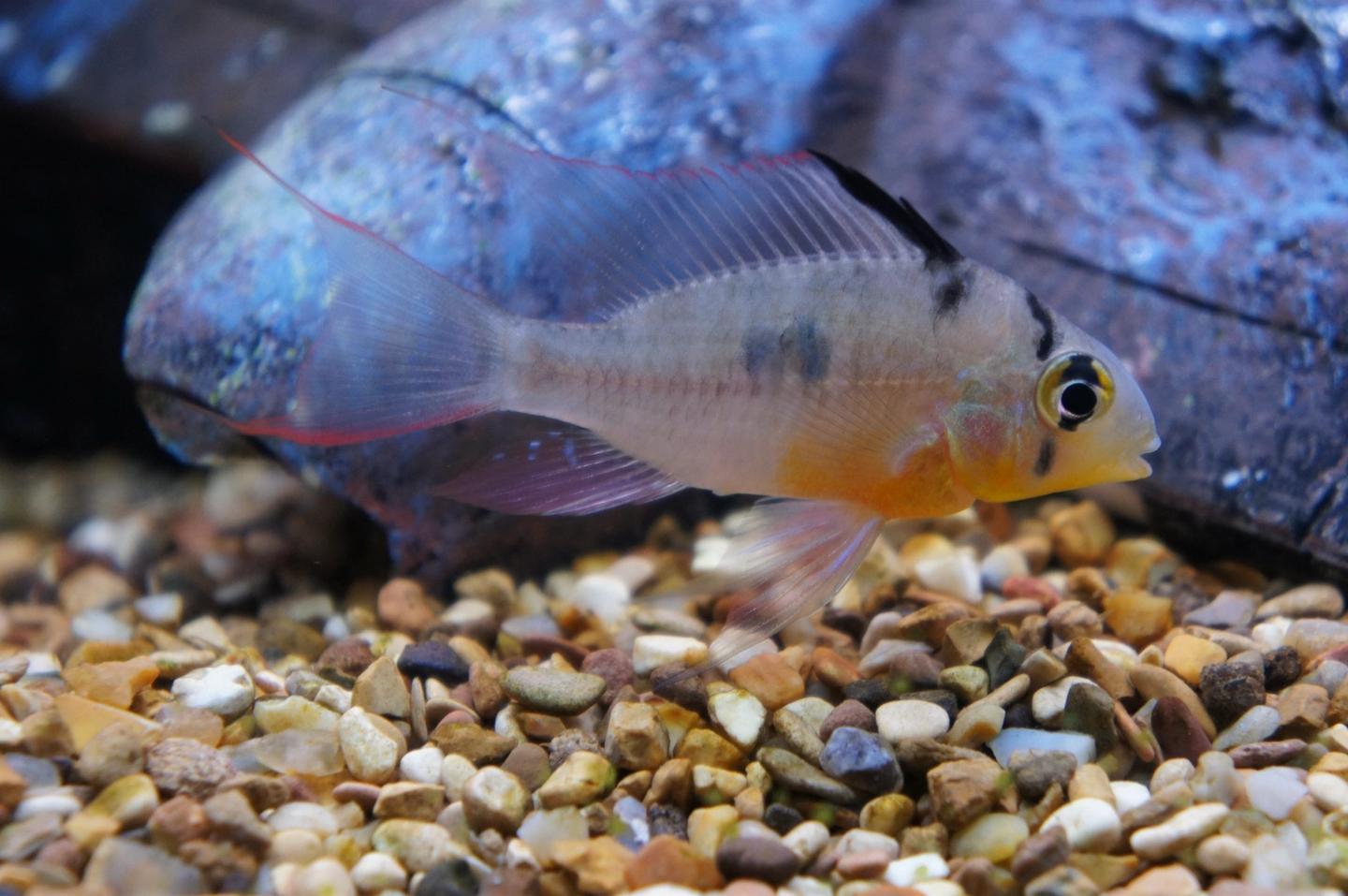
Cichlids are a family of roughly 1,800 accepted species, not one care type. Before buying, identify the exact species and source, then compare adult measurement, usable tank dimensions, social system, territory, tested water, diet and an exit plan. No family-wide minimum tank, water range or tank-mate list is safe.
Maintain these water conditions for optimal health and vibrant colors
The Gibbiceps Dwarf Cichlid (Apistogramma gibbiceps) is a beautifully patterned South American dwarf cichlid that rewards dedicated aquarists with fascinating behaviour, compact size, and stunning colouration. Native to the upper Amazon basin in Peru and adjacent regions, this species inhabits soft, acidic blackwater habitats where it forages among leaf litter, roots, and submerged vegetation. Reaching an adult size of approximately 6cm, the Gibbiceps Dwarf Cichlid is perfectly suited to smaller aquariums and peaceful community setups with carefully chosen tank mates. With a semi-aggressive temperament (particularly during breeding) and moderate care requirements, this species is an excellent choice for intermediate aquarists seeking rare, colourful freshwater fish for sale UK-wide.
Quick Care Summary: Moderate-care dwarf cichlid; adult size 6cm; minimum 75L; soft, acidic water essential; carnivorous diet; provide caves and leaf litter; peaceful except when breeding; fascinating behaviour.
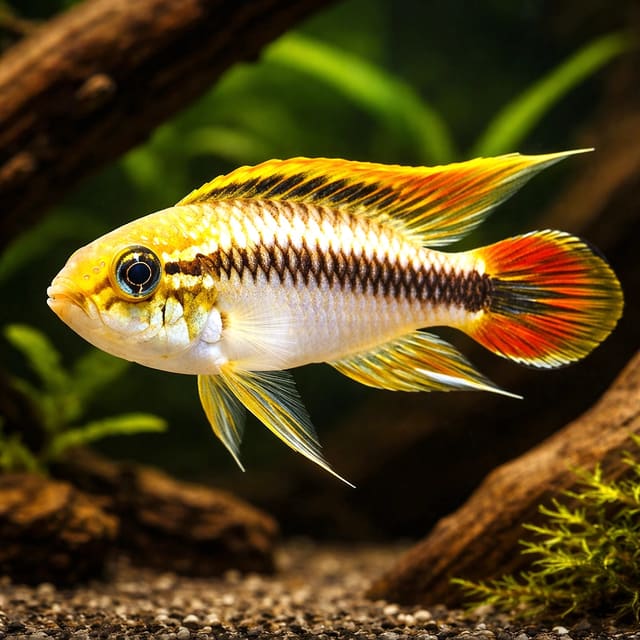
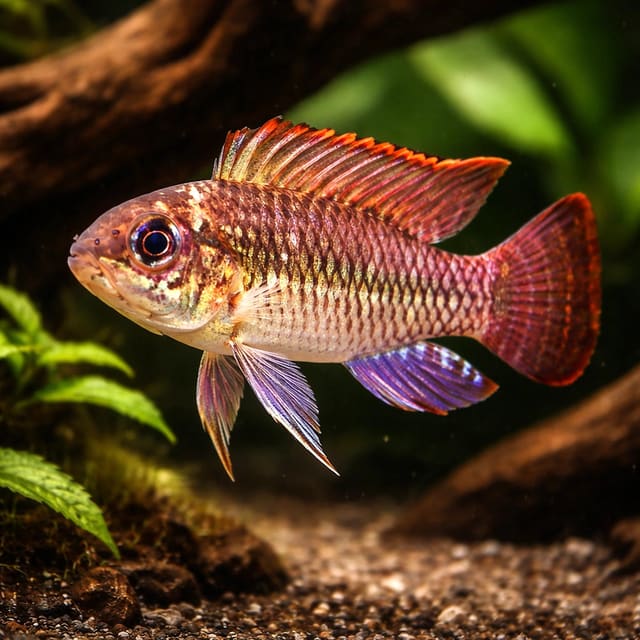
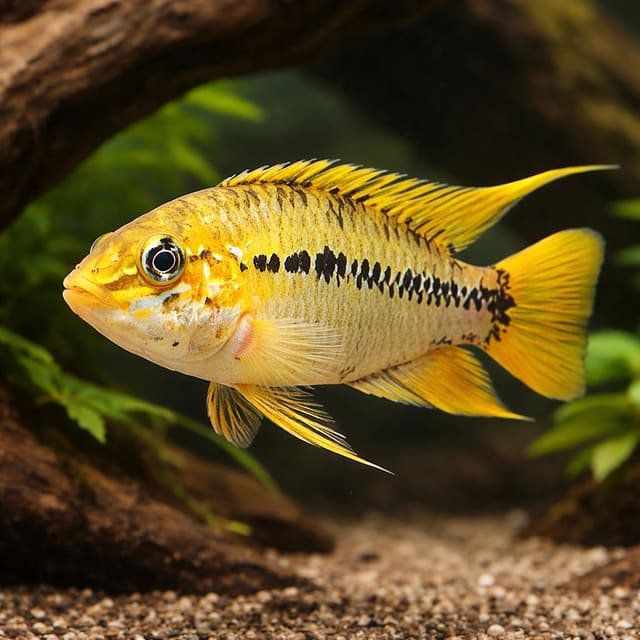
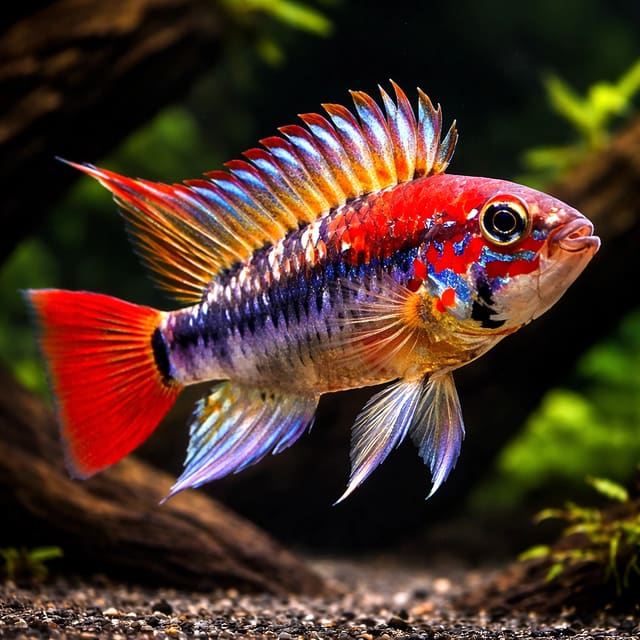
Apistogramma gibbiceps displays intricate patterning and subtle but beautiful colouration. Males are larger and more colourful, featuring elongated dorsal and anal fins, vibrant body colouration (often including shades of blue, yellow, orange, and red), and complex patterning on the face and body. The species name "gibbiceps" refers to the pronounced forehead hump that develops in mature males. Females are smaller, rounder-bodied, and display more subdued colours, often with a yellowish or brownish base and characteristic black markings. During breeding, females develop intense yellow or gold colouration, particularly on the belly and head, making them easy to identify. Healthy specimens display active behaviour, clear eyes, smooth scales, and well-defined finnage. Colour intensity varies with mood, health, and environmental conditions, with well-conditioned fish in optimal water showing the most vibrant hues.
In the wild, Apistogramma gibbiceps is native to the upper Amazon basin, particularly in Peru and adjacent regions, where it inhabits slow-moving streams, forest creeks, and flooded forest areas. These habitats are characterised by soft, acidic, tannin-stained water, dense leaf litter, submerged roots and branches, and sandy or muddy substrates. Water is typically tea-coloured from decaying organic matter, creating a gentle, sheltered environment with low to moderate light levels. The species is a bottom-dwelling carnivore, feeding on small invertebrates, insect larvae, and microorganisms found among the leaf litter. Breeding occurs in caves, crevices, or hollows beneath roots. Understanding this natural ecology is essential for replicating suitable conditions in captivity and encouraging natural behaviours, including breeding and territorial displays.
A minimum aquarium size of 75 litres is recommended for Apistogramma gibbiceps, with larger tanks preferred for community setups or keeping multiple females with a single male (harem structure). The substrate should be fine sand or very smooth rounded gravel, and the aquarium should be densely furnished with driftwood, smooth rocks, caves (such as coconut shells, slate, or terracotta pots), and live plants including Anubias, Cryptocoryne, Java Fern, and floating plants. Add generous amounts of leaf litter (Indian almond, oak, or beech leaves) to replicate the tannin-rich conditions of Amazonian blackwater habitats and provide foraging opportunities. Filtration should be efficient but gentle; use a sponge filter or canister filter with adjustable flow. Water flow should be minimal to moderate, replicating the slow-moving streams of their natural environment. Lighting should be subdued, and the aquarium should be well-covered to prevent jumping. Allow the tank to mature before adding fish to establish beneficial biofilm and microfauna.
Maintaining soft, acidic, clean water is essential for Apistogramma gibbiceps. Temperature should be kept between 24-28°C, with 26°C being ideal. pH should be acidic, ranging from 5.0-7.0, with 5.5-6.5 preferred. Water hardness should be very soft, with GH 2-8 and KH 0-4 recommended. Use RO (reverse osmosis) water remineralised with specialist Amazonian salts, or naturally soft tap water if available. Tannins from leaf litter, driftwood, or peat filtration help soften water and lower pH naturally. Ammonia and nitrite must always be at zero, and nitrates should be kept below 10ppm through frequent small partial water changes (15-20% weekly) and efficient biological filtration. The species is sensitive to poor water quality and unstable parameters, so diligent maintenance and regular testing are essential. Use a high-quality test kit and ensure filtration is well-maintained. Provide good oxygenation but avoid strong currents.
Top Tip: Add plenty of leaf litter and driftwood — these naturally release tannins that soften water, lower pH, and create the blackwater conditions essential for health and breeding.
Apistogramma gibbiceps is a carnivore with a natural diet consisting of small invertebrates, insect larvae, and microorganisms. In the aquarium, offer a varied, high-protein diet of quality micro pellets designed for carnivorous dwarf cichlids, supplemented with frozen and live foods such as daphnia, brine shrimp, bloodworms, and small insect larvae (such as mosquito larvae or grindal worms). Avoid large or hard foods that are difficult for small mouths to consume. Feed small amounts 1-2 times daily, ensuring food reaches the substrate where the fish typically feed. A varied, protein-rich diet promotes vibrant colouration, healthy growth, successful breeding, and strong immune function. Well-conditioned adults are more likely to spawn and exhibit strong parental care. Occasional high-quality prepared foods can be offered for convenience, but live and frozen foods should form the basis of the diet.
Apistogramma gibbiceps is generally peaceful toward similarly sized, non-threatening species but becomes semi-aggressive and territorial during breeding. Males establish and defend small territories centred around a preferred cave or shelter, and will display vibrant colours, fin-flaring, and aggressive posturing to ward off rivals. Females typically occupy smaller sub-territories and are less aggressive outside of breeding periods. The species is a bottom-dweller, spending most of its time foraging among leaf litter, exploring caves, and interacting with its environment. Breeding behaviour is fascinating to observe, with males courting females through colour displays and fin movements. Both parents may participate in brood care, though the female typically guards the eggs and fry while the male defends the broader territory. Observing the complex behaviours and interactions of dwarf cichlids is one of the great pleasures of the hobby.
Choosing appropriate tank mates for Apistogramma gibbiceps requires careful consideration of size, temperament, and water parameter compatibility. Ideal companions include small, peaceful schooling fish such as tetras (e.g. Ember Tetras, Rummy Nose Tetras), rasboras, pencilfish, hatchetfish, and peaceful Corydoras catfish or Otocinclus. Avoid large or boisterous fish, fin-nippers, aggressive cichlids, very active bottom dwellers that compete for territory, and any fish large enough to prey on them. Dwarf shrimp and snails may coexist but could be at risk, particularly when breeding adults are present. Tank mates should ideally occupy the midwater or upper levels to reduce territorial conflict. A well-planned South American biotope community featuring peaceful, similarly sized species from soft, acidic water habitats is the ideal setting. Ensure ample space, multiple territories, and plenty of hiding places to minimise aggression.
Apistogramma gibbiceps is a cave-spawning species, with breeding typically occurring in well-maintained aquariums with stable, soft, acidic water and plenty of cover. Provide a bonded pair or a single male with 2-3 females (harem structure), and offer multiple caves and leaf litter for spawning sites. Females lay adhesive eggs on the roof or walls of a chosen cave, and the female typically guards the eggs and fry closely while the male defends the wider territory. Eggs hatch in 2-3 days, and fry become free-swimming after a further 5-7 days. Fry can be fed on infusoria, liquid fry food, or finely crushed flakes initially, graduating to newly hatched brine shrimp and microworms as they grow. Soft, acidic water with low disturbance and excellent water quality improves breeding success. For best survival rates, consider removing tank mates or raising fry in a separate rearing tank. Breeding dwarf cichlids is highly rewarding and provides fascinating insight into complex parental behaviours.
Tropical Fish Co is proud to offer healthy, vibrant Apistogramma gibbiceps sourced from trusted breeders and carefully quarantined to ensure peak condition upon arrival. Every fish is inspected for health, colour, and vitality before dispatch, and we provide expert advice and ongoing support to help you create the ideal South American biotope environment. With fast, reliable delivery across the UK and a commitment to customer satisfaction, Tropical Fish Co is your trusted partner for rare freshwater fish for sale UK-wide. Whether you're setting up a dedicated Apistogramma tank, planning an Amazonian biotope, or adding colourful personality to a peaceful community, our team is here to help you succeed. Shop with confidence and discover the beauty and charm of the Gibbiceps Dwarf Cichlid from Tropical Fish Co.
No reviews for this item yet. Bought one? Honest reviews only, good or bad.
What customers say about ordering from us
Easy website plenty of info on fish your buying great to pick a time slot
TRACEY DURRANT · 7 Oct 2026
Got some lovely fish thank you
Kevin Mackie · 7 Oct 2026
Reviews of our shop, collected by Judge.me, an independent third-party review collector. Newest first.